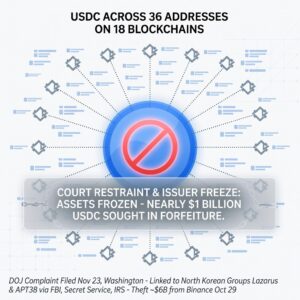
As reported on November 24, 2026, the U.S. Department of Justice filed a civil forfeiture action seeking more than $1.1 billion in USDC linked to a cryptocurrency theft from Binance that the filing attributes to North Korea.
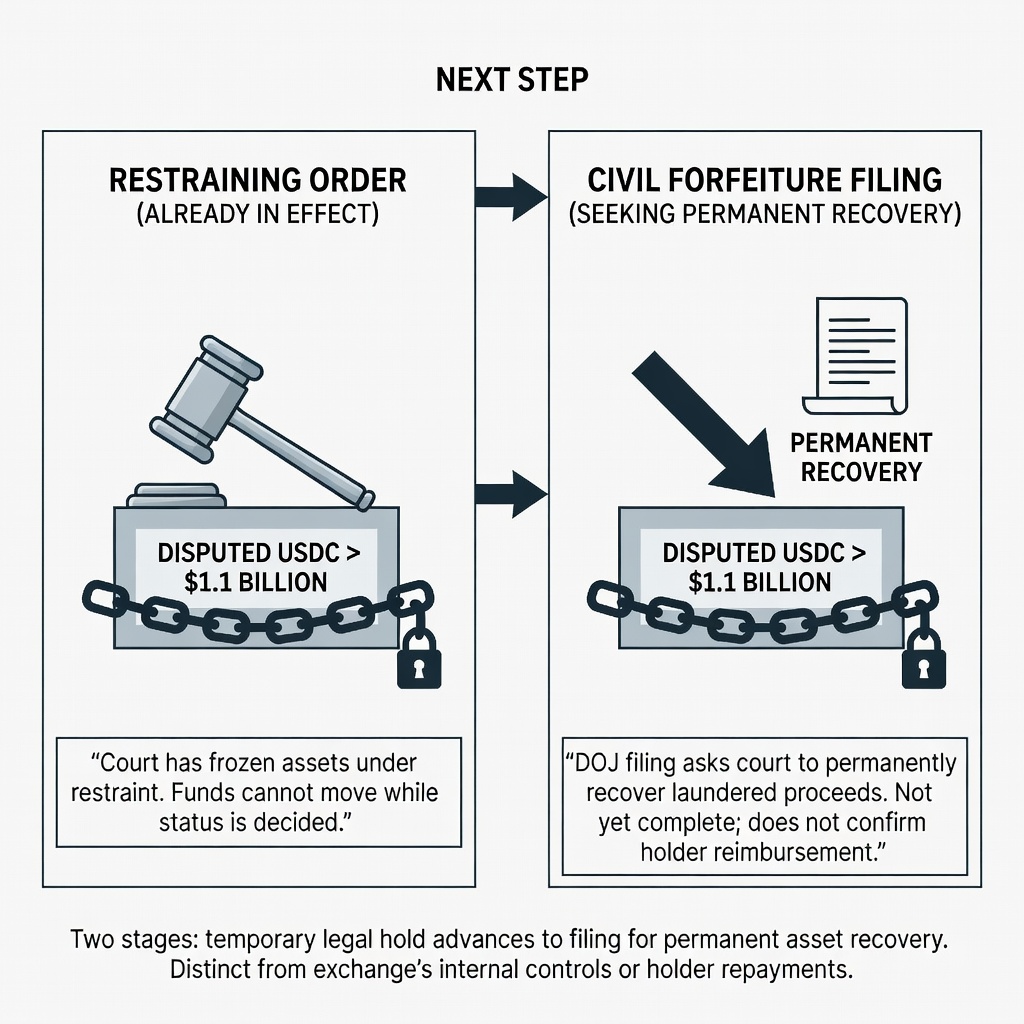
The action targets funds allegedly stolen in the October 29, 2026 breach. A civil forfeiture filing asks a court to permanently recover property. It is not, by itself, a completed forfeiture, and it does not show that customer balances have been restored.
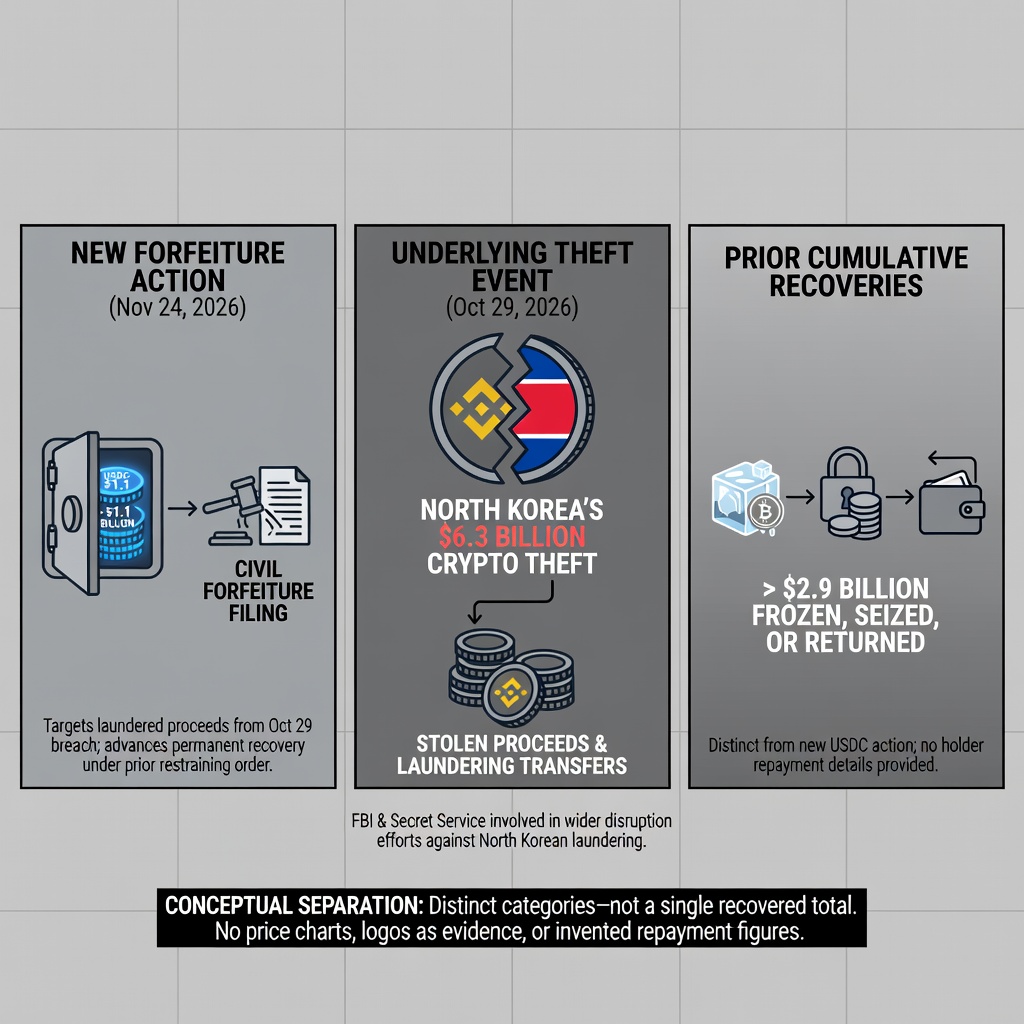
Court filings describe the disputed USDC as stolen proceeds and as funds transferred through laundering. After the attack, the government obtained a restraining order over these assets. The November 2026 filing is the next step toward permanent recovery of funds already under that restraint.
The report separates two figures. The underlying event is described as North Korea’s $6.3 billion cryptocurrency theft from Binance. The new case concerns more than $1.1 billion in USDC said to be linked to that theft, not the full $6.3 billion. The department’s move is also described as part of a wider effort to recover assets and disrupt North Korea’s cryptocurrency laundering. The government has already helped freeze, seize, or return more than $2.9 billion in stolen cryptocurrency. That cumulative amount is distinct from the USDC named in this action. The report does not say how much, if any, has been returned to individual holders.
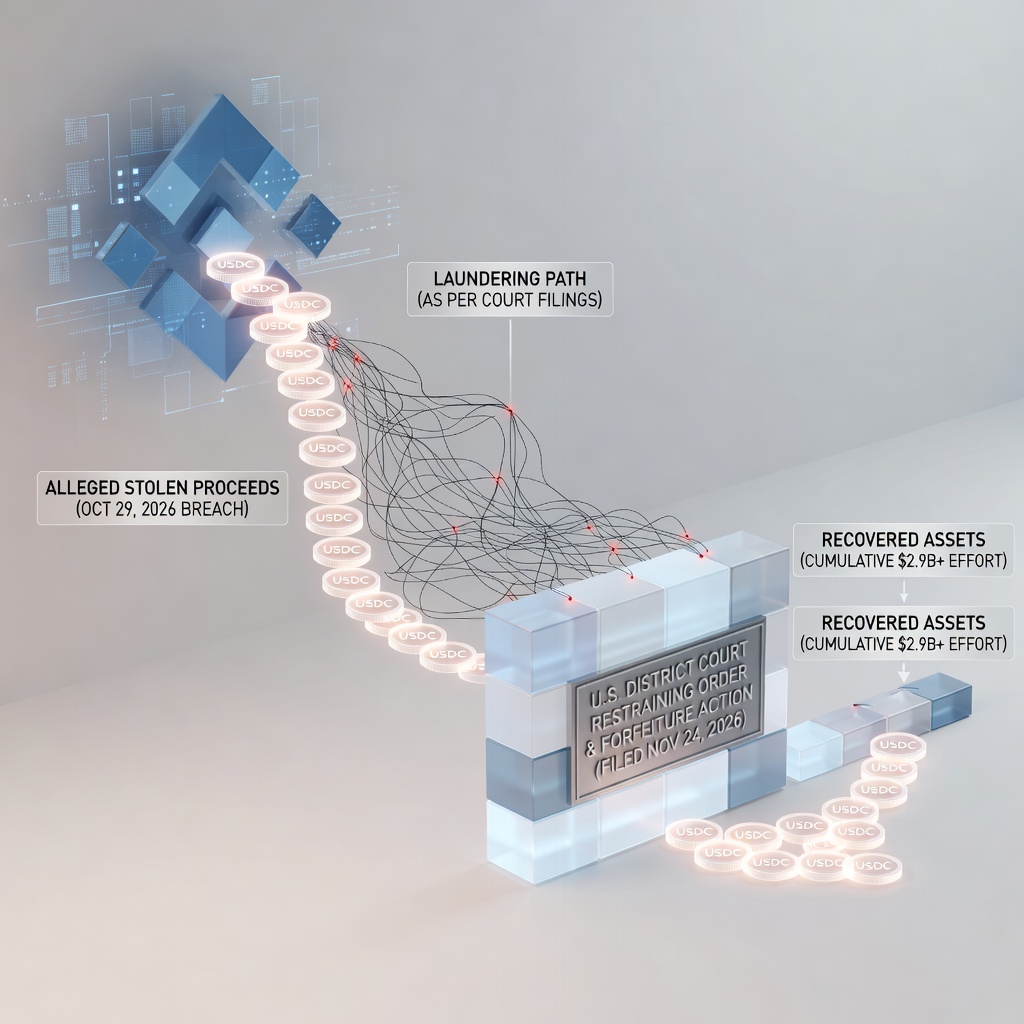
The FBI and the Secret Service are named in connection with the effort.
For someone holding stablecoins with an exchange, the practical distinction is between a legal hold on alleged proceeds and control of one’s own coins. A restraining order and a later forfeiture case can keep disputed funds from moving while a court decides their status. They do not replace the exchange’s own custody controls, and they are not confirmation that holders have been repaid. The report does not describe reimbursement terms, wallet arrangements, or audit findings.