Holding your own crypto means making choices about what others can learn from your wallet. A public blockchain lets anyone check that its rules have been followed, but that same visibility can expose a holder’s financial activity. A privacy feature may limit one kind of disclosure without protecting against others.
This overview reflects a report published on November 16, 2026, at 09:29 (UTC+8). It examines the trust boundaries between the public ledger, the wallet, the network and the device used to access them.
Bitcoin’s original privacy compromise
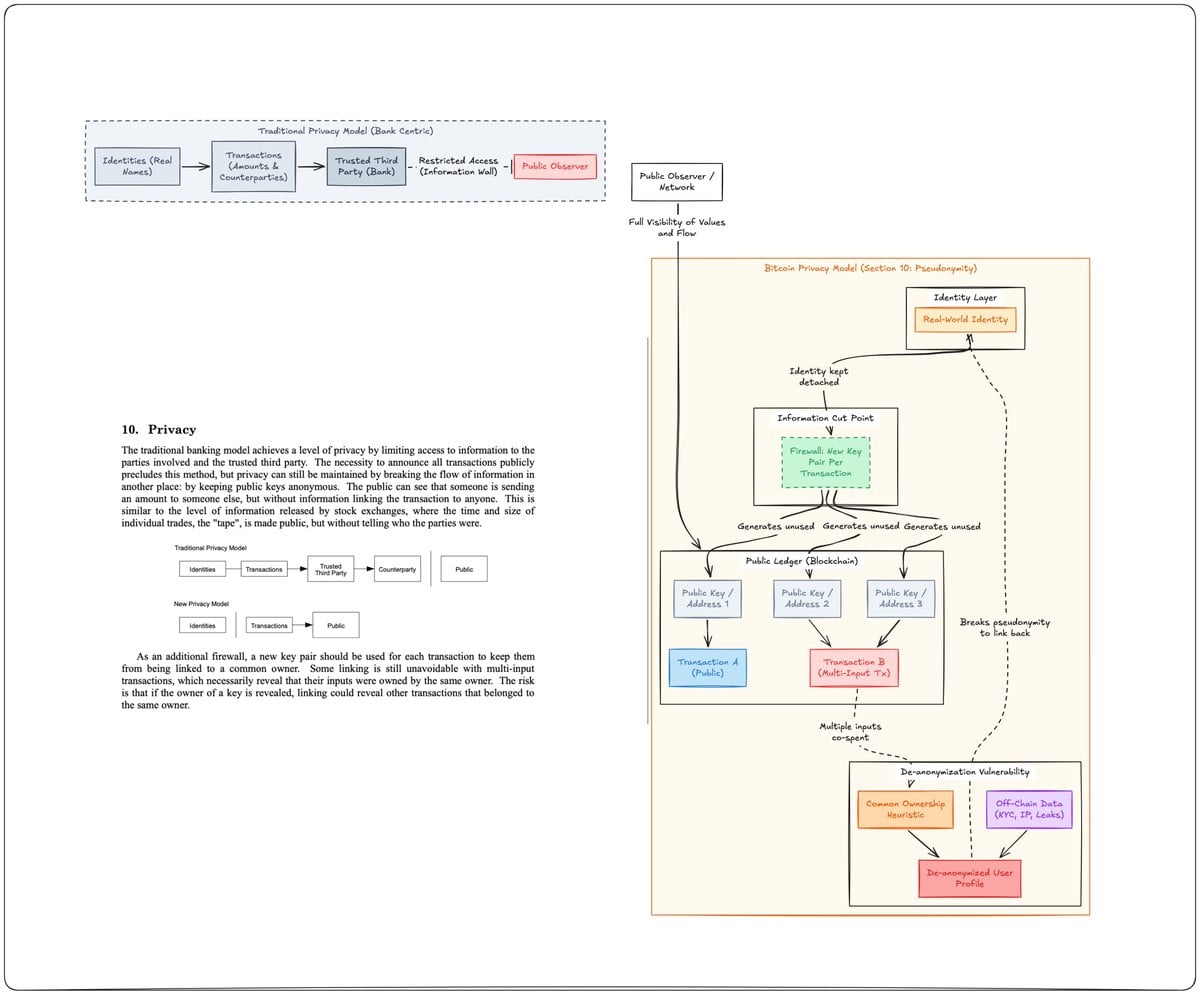
In Section 10 of the 2008 Bitcoin white paper, Satoshi Nakamoto contrasted banking’s restricted access to transaction records with Bitcoin’s publicly announced transactions. The proposed protection was to keep public keys separate from real-world identities and use a new key pair for each transaction. That provides pseudonymity, not confidential payments.
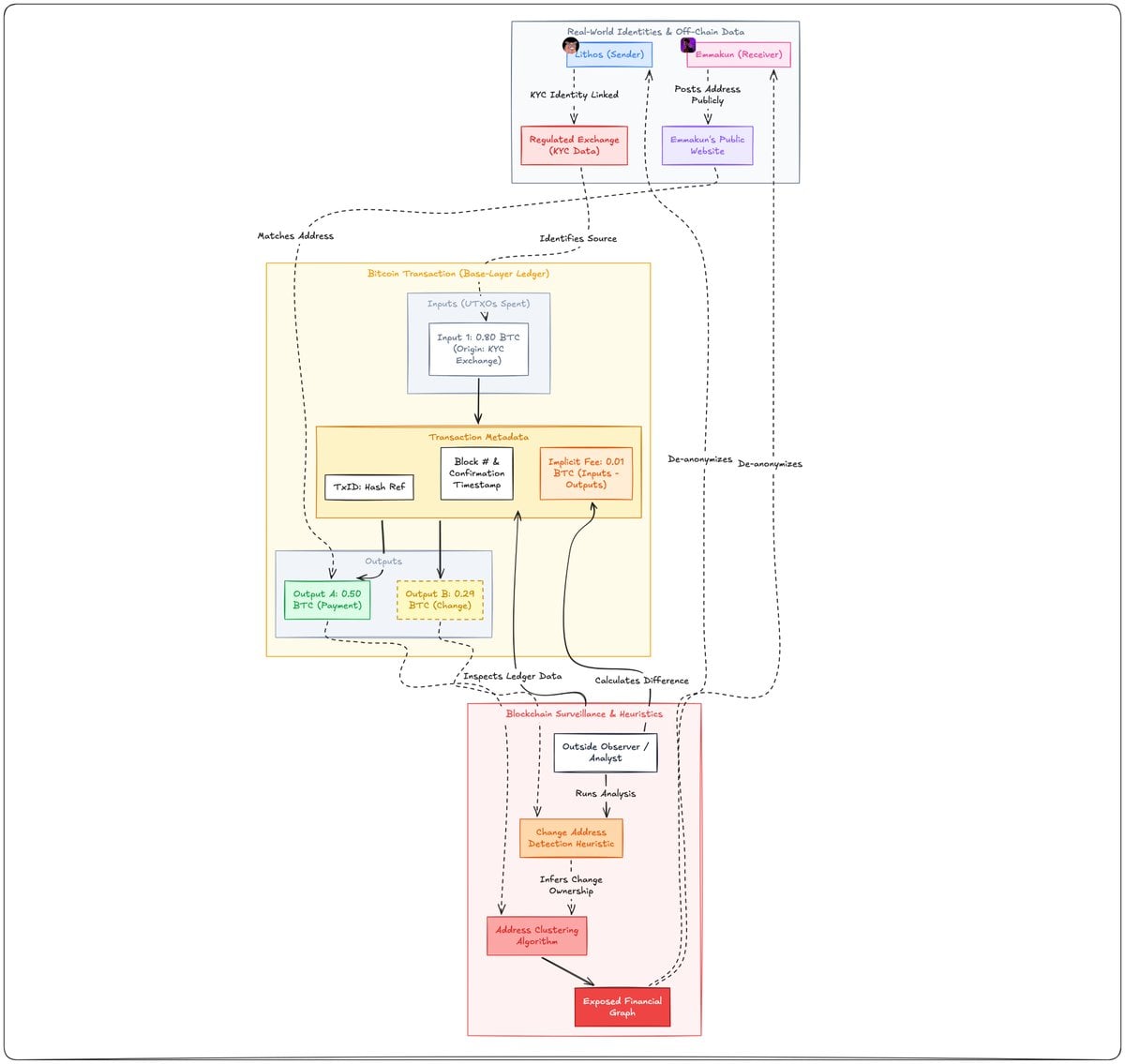
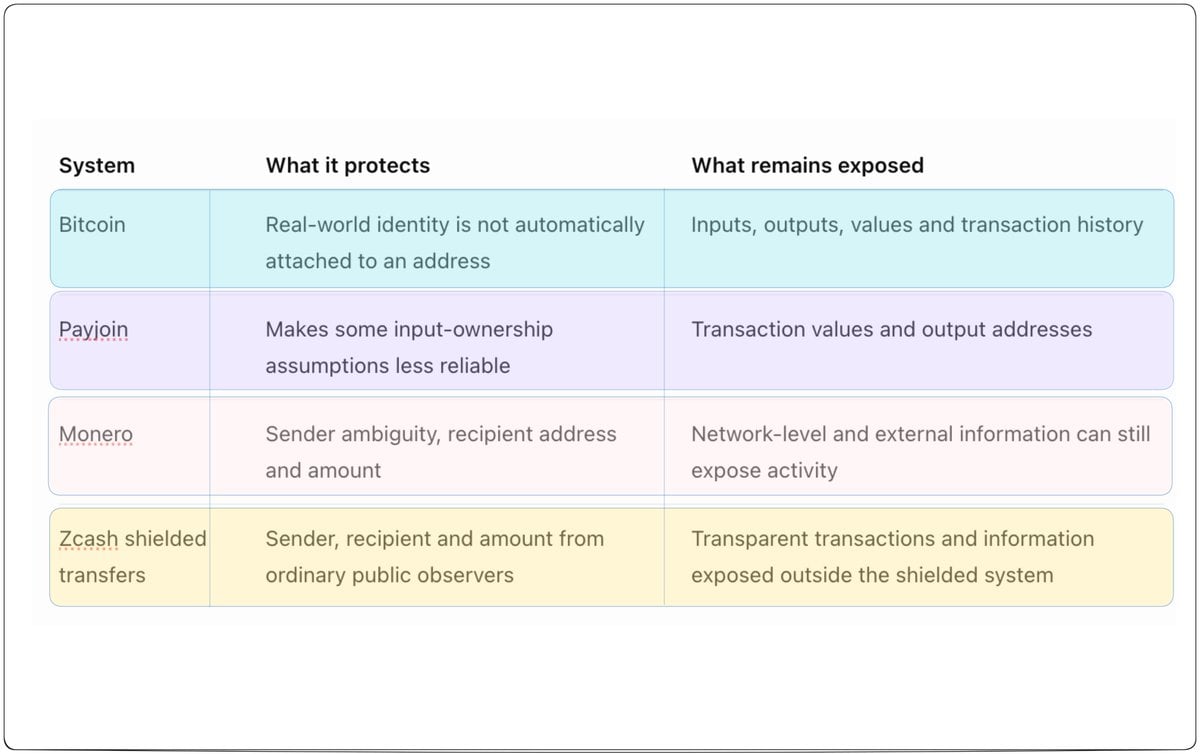
A Bitcoin observer can inspect a transaction’s inputs, outputs and amounts, calculate its fee, and see the block height and timestamp. If an address becomes associated with a person—for example, through an exchange account or a publicly posted donation address—other activity may become easier to investigate. Analysts can also guess which output is change, although those guesses are not always right.
A common-input assumption treats all inputs to a transaction as belonging to one owner. Payjoin, specified in BIP 78, challenges that assumption by letting the recipient contribute an input too. It does not hide the amount or make Bitcoin transactions confidential.
How the approaches differ
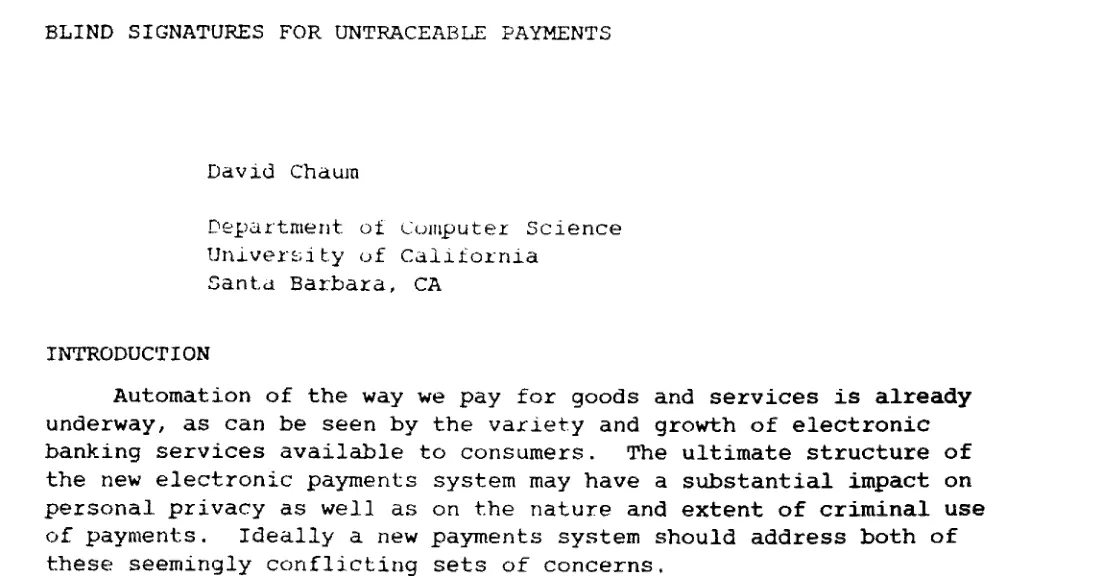
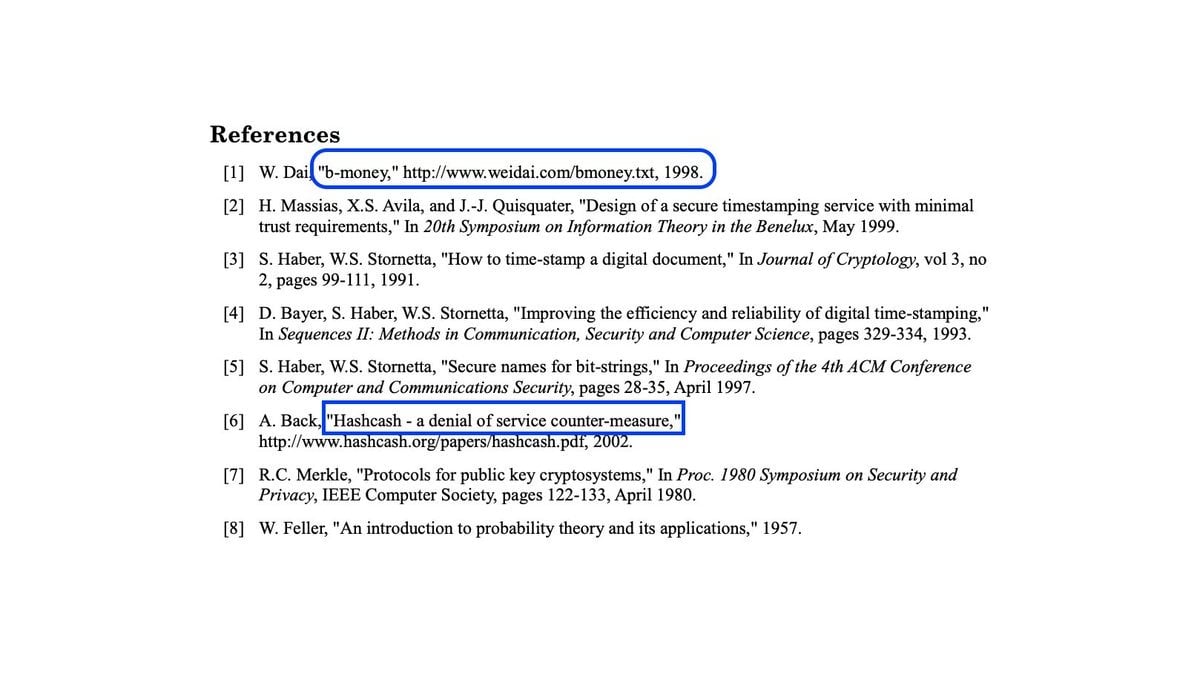
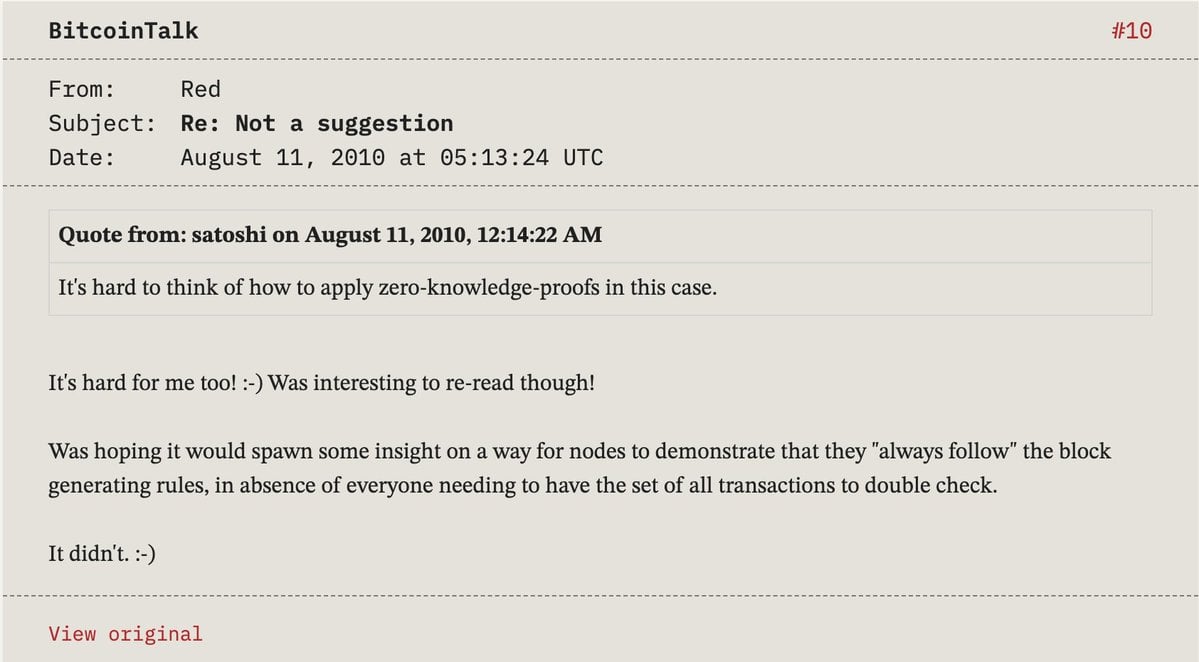
The privacy question predates Bitcoin. David Chaum’s 1982 work on blind signatures examined payments that an issuer could not link to the resulting transaction, while retaining a centralized issuer. Later proposals—including Adam Back’s Hashcash, Wei Dai’s b-money, Nick Szabo’s bit gold and Hal Finney’s reusable proof of work—addressed different pieces of the digital-cash problem. Nakamoto cited Hashcash and b-money in the Bitcoin white paper. In a 2010 BitcoinTalk discussion, Nakamoto also raised a specific difficulty with applying zero-knowledge proofs to checking for double spending without sufficient transaction history; that was not a rejection of every use of such proofs.
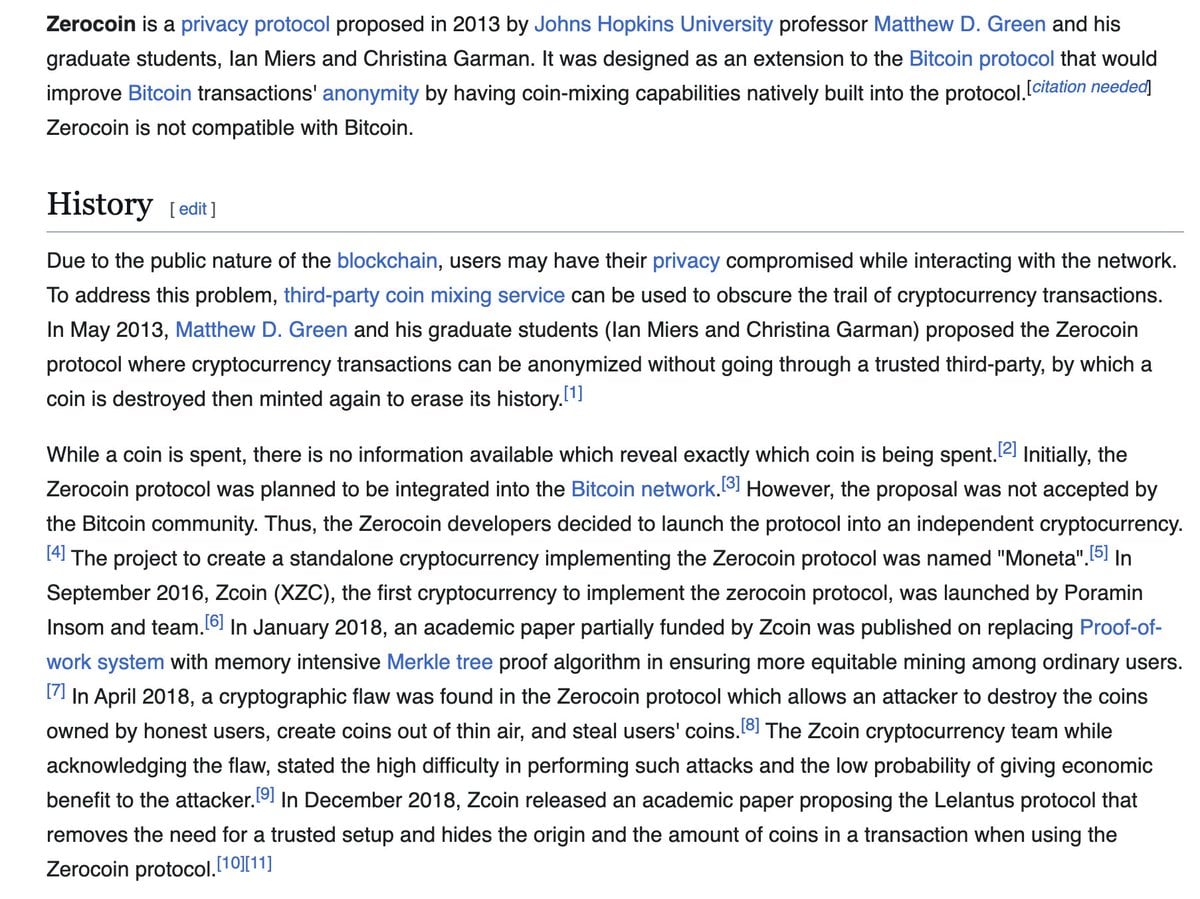
Research subsequently moved beyond separating names from addresses. Zerocoin in 2013 explored breaking a payment’s link to its source but still exposed its destination and amount. Zerocash in 2014 described using zero-knowledge proofs to conceal the sender, recipient and amount while allowing validity checks.
Today’s systems protect different parts of a payment:
- Monero combines ring signatures, stealth addresses and RingCT to obscure the spent output, recipient link and amount. The source notes that sender privacy depends in part on the ring and information available to observers. Its Dandelion++ network-broadcast protection does not rule out all network-level observation.
- Zcash can conceal payment details in transfers between shielded addresses, while transactions involving transparent addresses remain visible. Actual privacy also depends on wallet support, use of the shielded pool and what can be inferred when funds move between pools. Viewing keys permit selected disclosure without granting spending authority.
- Privacy Pools, developed by 0xbow, uses proofs intended to let a withdrawal demonstrate membership in a screened set without identifying its particular deposit. That describes the protocol’s selective-disclosure approach, not a guarantee that screening eliminates illicit funds.
The wallet and application boundary
Private on-chain transfers do not automatically make a wallet’s activity private. Balance checks, transaction-history requests, contract simulations and token-data queries can tell a remote RPC provider which accounts a user is examining. Kohaku, described in the source as an open-source privacy-oriented wallet and SDK specification, aims to address this exposure; its proposed use of private information retrieval would let a server answer a query without learning the specific account requested. It should be understood as an aim, not as proof that ordinary wallet queries are already protected.
Smart-contract systems introduce further trade-offs. Aztec describes private functions executed in a user’s local private execution environment, with proofs submitted to the network, alongside public functions using shared state. A remote node answering the client’s queries may still learn what data interests the user. Oasis Sapphire instead uses trusted execution environments for confidential contract processing, introducing reliance on hardware security and its implementation. Umbra V2 focuses on transfers within a Solana shielded pool; deposits and withdrawals can still leave visible timing and amount clues.
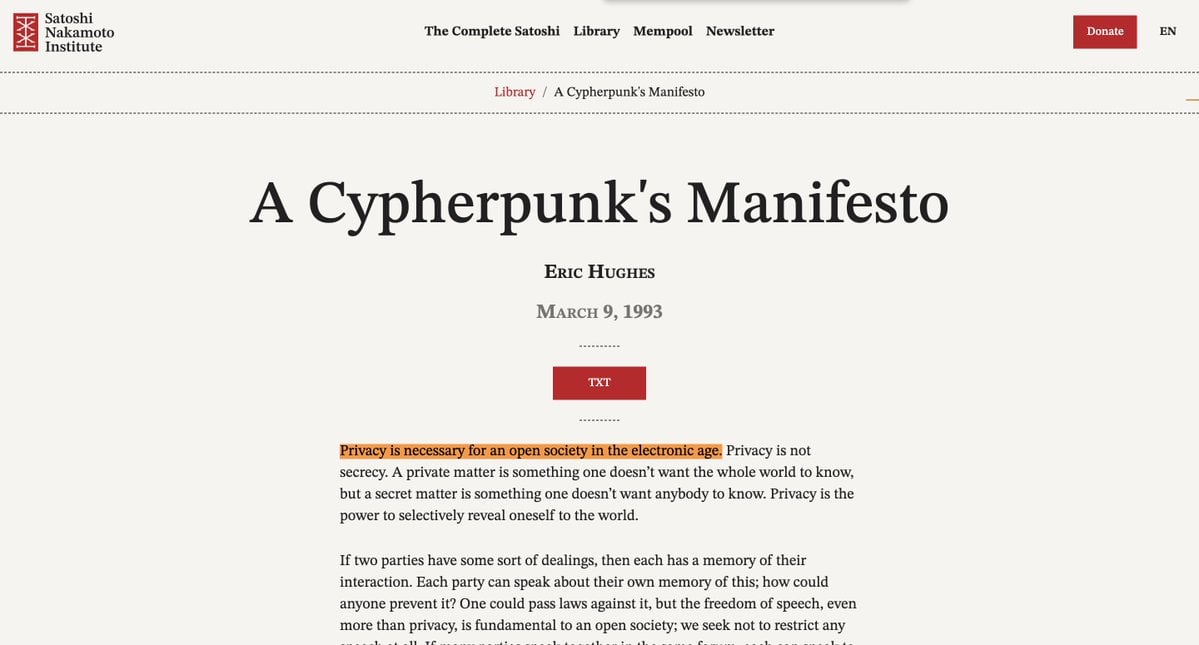
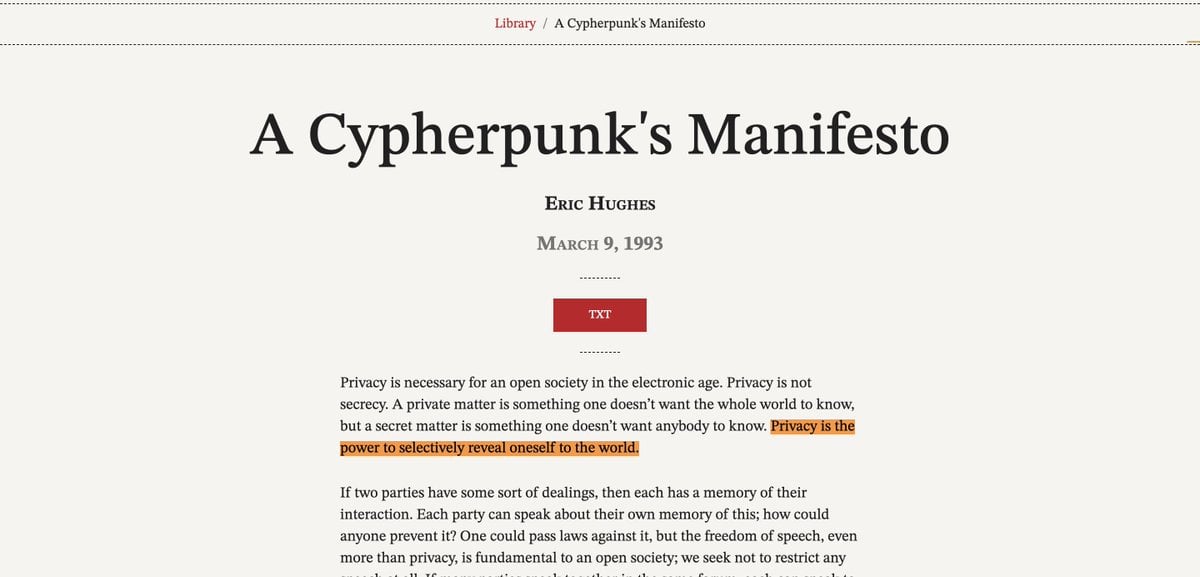
For a holder, the manageable check is to ask which information a tool hides, from whom, and at what stage. Ledger visibility, RPC queries, network traffic and device security are separate boundaries. None of the approaches described here makes all of them disappear. Eric Hughes’s 1993 formulation—privacy as the ability to reveal oneself selectively—captures the goal more precisely than a blanket promise of anonymity.