A locked wallet and a closed door were separate barriers in a case involving an attempted theft of crypto assets worth up to about $2.7 million (£2 million). As reported by Foresight News on November 11, 2026, citing Decrypt, Scotland’s High Court of Justiciary sentenced 29-year-old Robert Barr to eight years in prison for involvement in serious organised crime. The planned theft did not succeed.
According to the court account, Barr devised the plan while serving a 21-month sentence for fraud in Edinburgh Prison. Two associates, Sean Favier and Iain Doyle, were to enter the home of a crypto-startup co-founder near Edinburgh and force the victim to install AnyDesk remote-control software. Barr would then remotely operate the computer from prison and transfer crypto assets to a wallet he controlled.
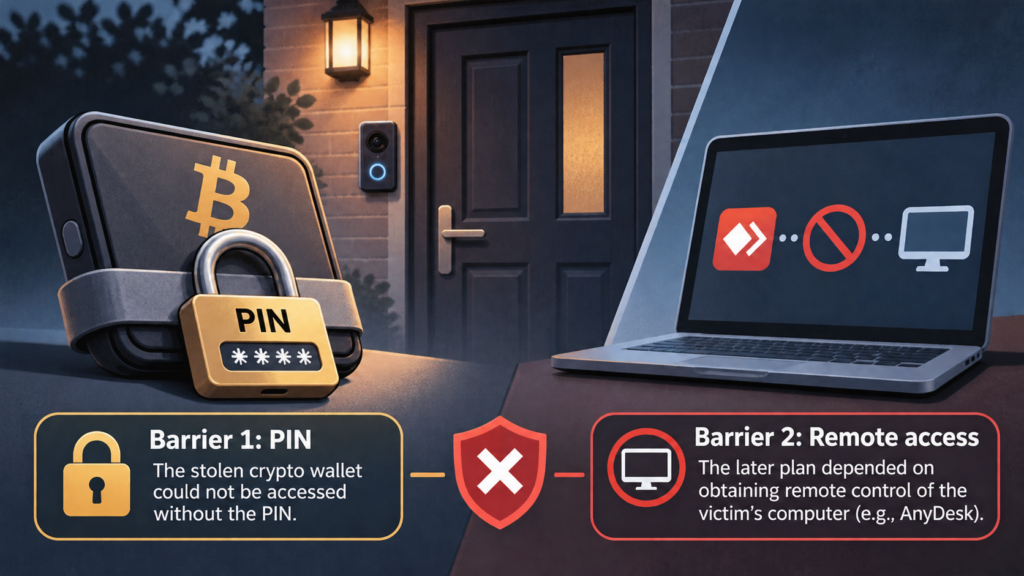
Late on April 17, 2024, the victim saw the two men through a doorbell camera and refused to open the door. Barr’s associates had previously broken into the home in January 2024 and stolen a crypto wallet, but could not withdraw its funds without the PIN.
Favier and Doyle received prison sentences of four and five years, respectively. All three pleaded guilty. The judge said the plan involved months of preparation, including identifying the victim, gathering photos of the home and visiting the area. Messages on a phone showed they had “clearly considered threats and/or violence,” the judge said. Barr’s previous crypto-fraud conviction and his unlawful contact with people outside prison while planning the offence were significant aggravating factors.
The case illustrates two distinct custody boundaries: a PIN prevented access to the stolen wallet, while the later plan depended on obtaining remote control of the victim’s computer. Neither barrier should be mistaken for a guarantee against every form of coercion.