For a long-term Bitcoin holder, the question is not simply whether to keep the keys. It is which risks come with keeping them—and which risks are transferred, rather than eliminated, when custody moves to an institution.
This article reflects reporting published by PANews on November 11, 2026, at 16:40 (UTC+8). PANews described growing concern about physical attacks, hardware-wallet security and exchange custody as some large holders converted directly held BTC into shares of BlackRock’s IBIT ETF.
Risks beyond a compromised private key
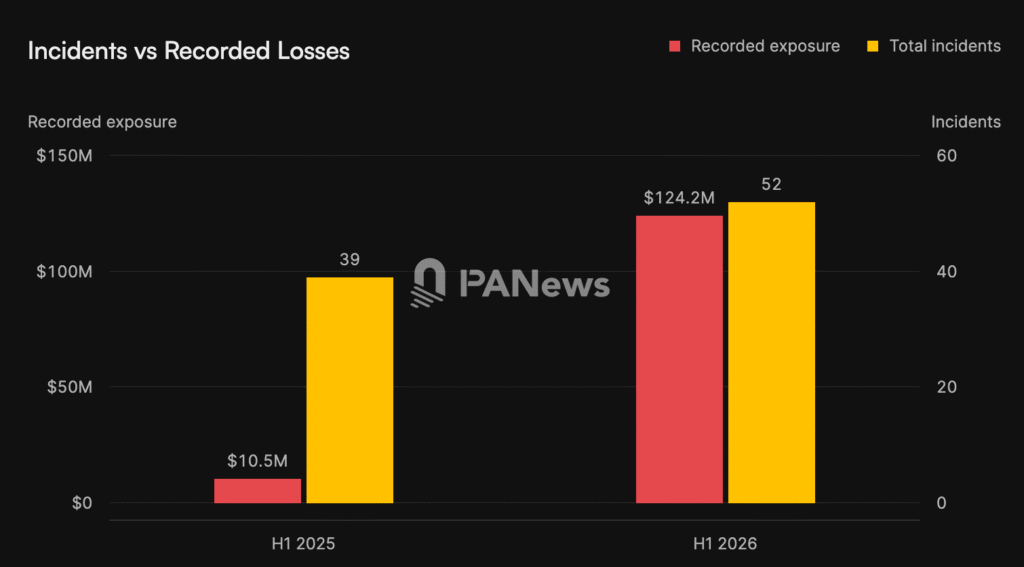
Physical coercion can bypass technical wallet protections. According to figures cited by PANews from blockchain security firm CertiK, 52 violent attacks targeting crypto holders were recorded worldwide in the first half of 2026, up 33.3% year over year. The incidents involved approximately $124.1 million in recorded funds exposure, compared with $10.5 million a year earlier; that exposure figure is not a confirmed loss total. CertiK recorded 33 of the attacks in France.
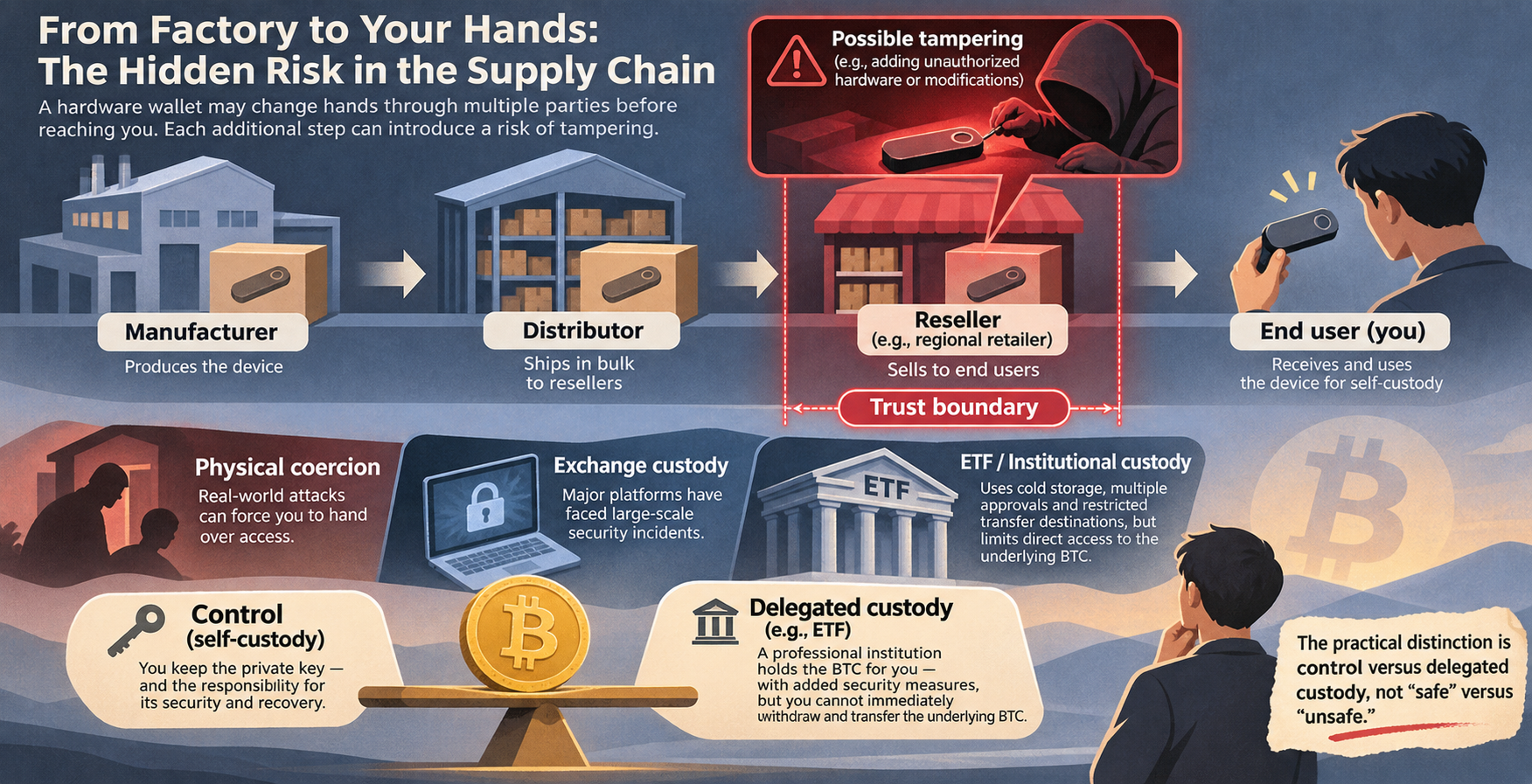
PANews also reported concerns about the devices used for self-custody. It said an earlier key-generation vulnerability in Coldcard led to the theft of more than $100 million in August 2026. For an October 2026 incident involving Ledger devices sold through Southeast Asian distributor CryptoBilis, it cited an estimated loss of up to about $93 million after unauthorized hardware implants were found. PANews said Trezor had confirmed that devices sold through CryptoBilis were suspected of similar tampering—not that equivalent losses had been established.
Custody at an exchange presents a different trust boundary. PANews described recent major security incidents at Bitget and Binance involving assets valued in the billions of dollars, without establishing that the full amount was lost. Bitwise chief investment officer Matt Hougan argued that an attack on Binance’s hot-wallet system should not be mistaken for a vulnerability in the Bitcoin network itself.
What an ETF changes
BlackRock digital-assets head Robbie Mitchnick said security and peace of mind were the main reasons customers gave for converting directly held BTC into IBIT shares. According to Mitchnick, BlackRock had recorded about $3.6 billion in such in-kind conversions since regulators approved the process in 2025; he said the actual total could be higher because BlackRock does not handle or see every conversion. He also said the minimum conversion size had fallen from roughly $30 million to about $1 million–$2 million.
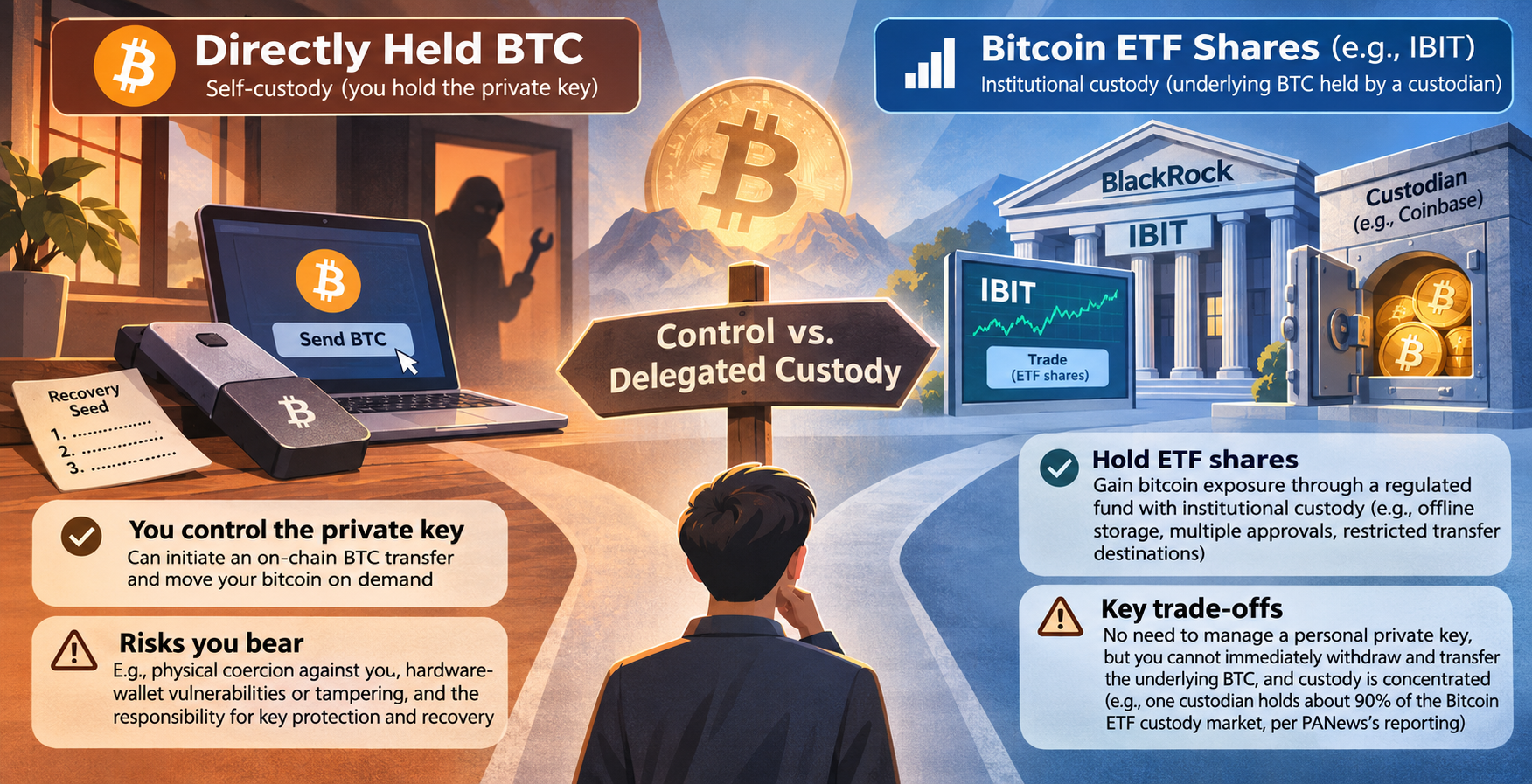
An ETF removes the holder’s need to safeguard a personal Bitcoin private key, but a share is not the same as BTC that its owner can transfer on demand. Hougan said ETF custody can use offline storage, multiple approvals and restricted transfer destinations. He also noted that, although ETF shares can trade throughout the day, holders cannot immediately withdraw and transfer the underlying bitcoin. These are his descriptions of the custody model, not a guarantee against loss.
Concentrating custody introduces its own concern. PANews cited Coinbase’s disclosure that it held about 90% of the Bitcoin ETF custody market. OneKey founder Yishi warned that concentrating BTC with one custodian could magnify the consequences of a successful attack. Coinbase, for its part, said its custody vault assets were held in cold storage and segregated on-chain, with controls including split private keys, transfer-rate limits, activity monitoring and an emergency stop mechanism. Coinbase also said it held client assets 1:1 and would not lend or use them without client instructions.
The practical distinction is control versus delegated custody, not “safe” versus “unsafe.” Self-custody leaves key protection and recovery with the holder; an ETF delegates custody but limits direct access to the underlying BTC. PANews’s reporting gives holders reasons to examine both sets of risks without treating any arrangement as risk-free.
Source: panewslab.com (originally published 2026-11-11 16:40 UTC+8)