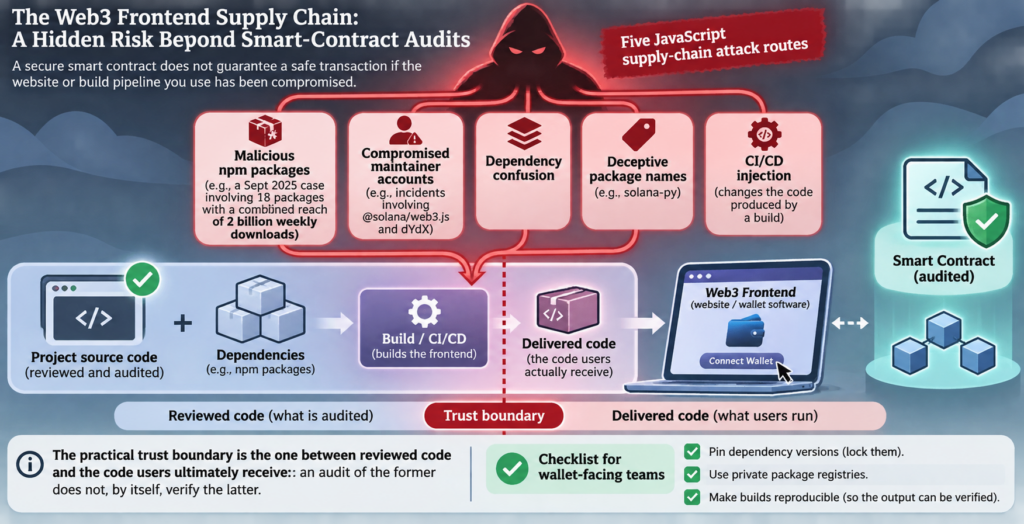
A secure smart contract does not guarantee a safe transaction if the website used to access it has been compromised. In an analysis published on May 7, 2026, the article identifies JavaScript supply-chain attacks as a way to tamper with a Web3 project’s frontend or build process, potentially putting funds at risk even when its smart contracts have been audited.
The analysis describes five attack routes: malicious npm packages; compromised maintainer accounts, citing incidents involving @solana/web3.js and dYdX; dependency confusion; deceptive package names, with solana-py given as an example; and CI/CD injection that changes the code produced by a build. It also cites a September 2025 case involving 18 packages with a combined reach of 2 billion weekly downloads. That download figure is not a reported loss figure.
For teams maintaining wallet-facing software, the article’s checklist includes pinning dependency versions, using private package registries and making builds reproducible. The practical trust boundary is the one between reviewed code and the code users ultimately receive: an audit of the former does not, by itself, verify the latter.