If you hold USDC, those tokens can be frozen by the issuer once prosecutors obtain legal restrictions. That is the custody trade-off in a case reported on November 24, 2026: a widely used dollar stablecoin is easy to transfer, but Circle—not only the wallet holder—can stop the identified tokens from moving.
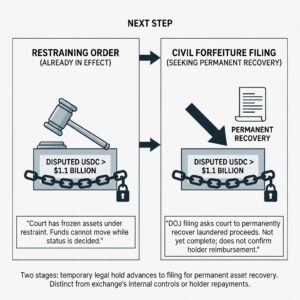
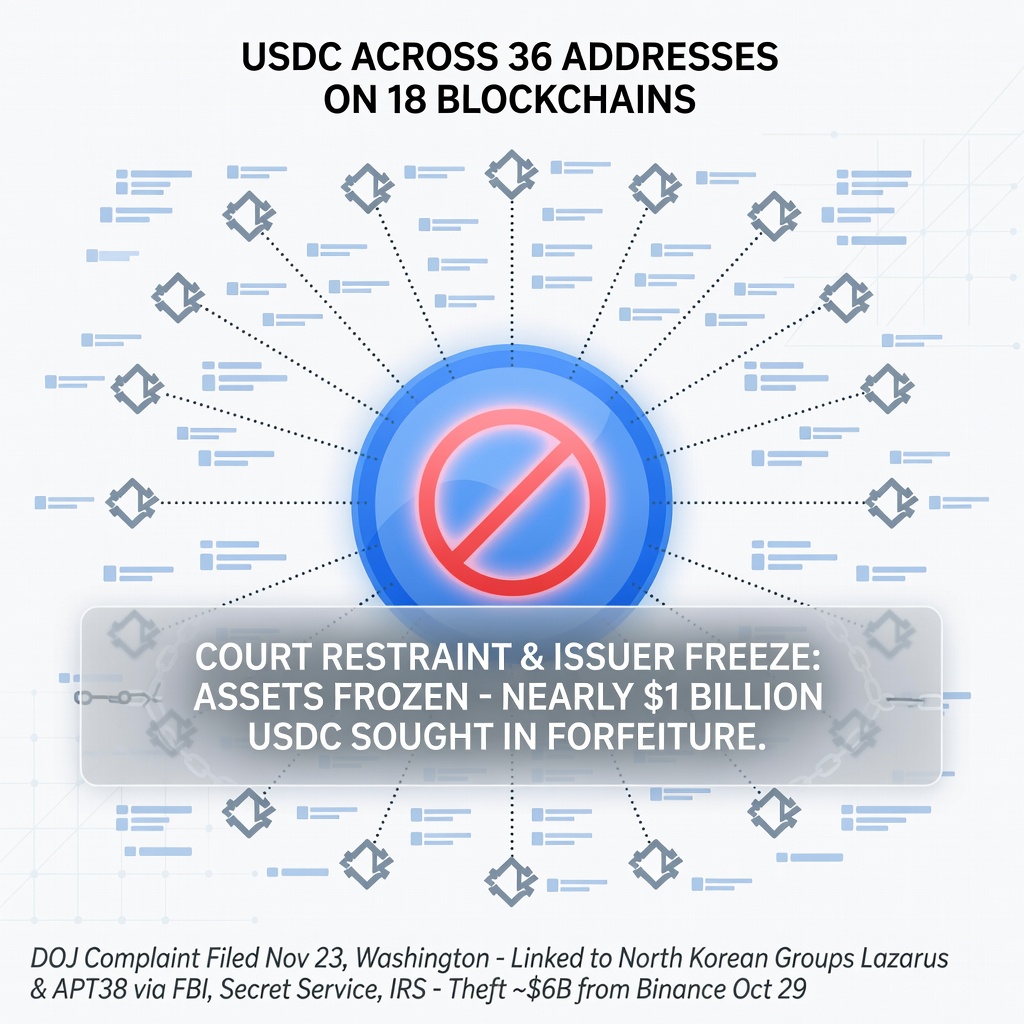
The U.S. Justice Department wants to seize nearly $1 billion in USDC connected to the October Binance hack. Prosecutors filed a civil forfeiture complaint in Washington on November 23, identifying funds held across 36 addresses on 18 blockchains. The complaint seeks to keep those funds from being transferred while the court considers forfeiture. Filing the complaint is a request, not a completed seizure.
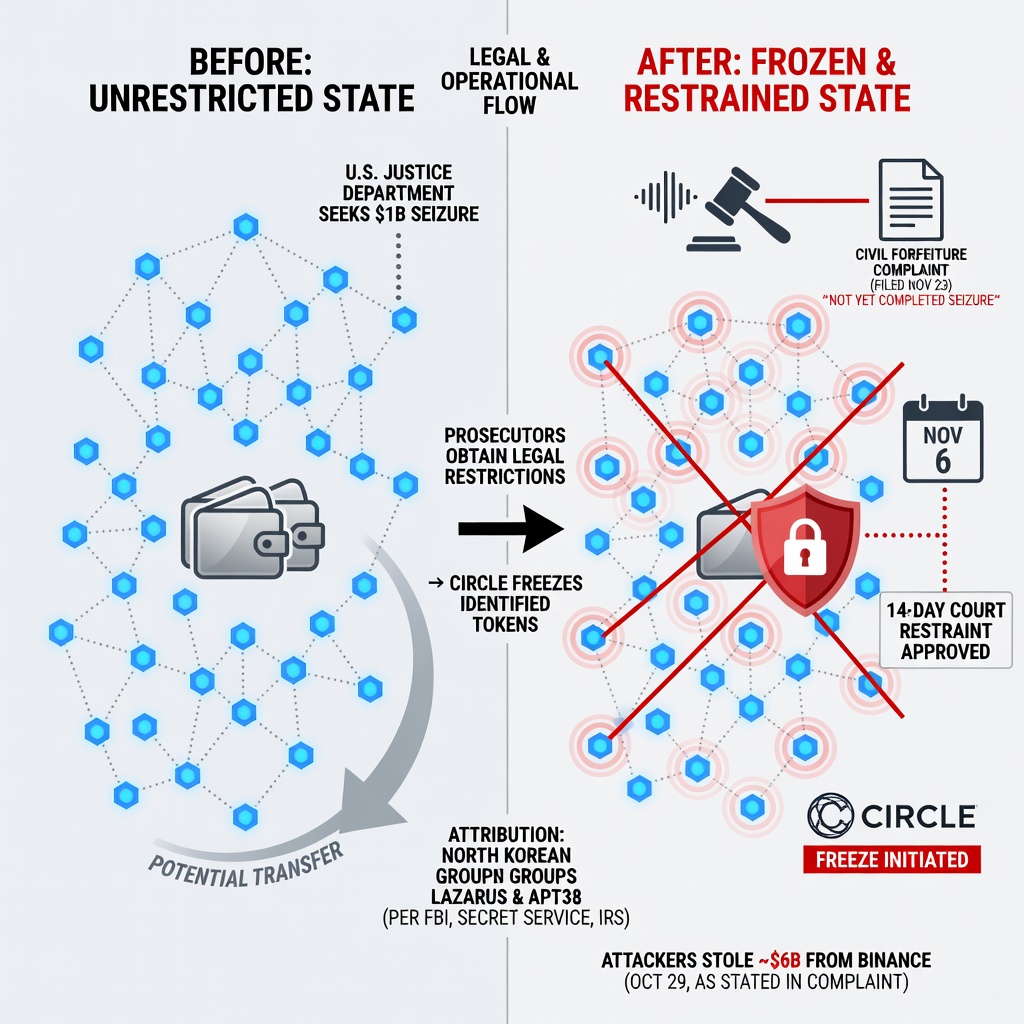
Circle, which issues USDC, froze the assets after prosecutors sought legal restrictions. A court had already approved a 14-day restraint on November 6.
Investigators have linked the wider attack to North Korean hackers. The FBI, the Secret Service, and IRS investigators attributed the wider theft to the North Korean groups Lazarus and APT38. According to the complaint, attackers stole roughly $6 billion from Binance around October 29. Both the loss figure and the group attribution are as stated in the complaint and by those investigators, not a separately confirmed final total.
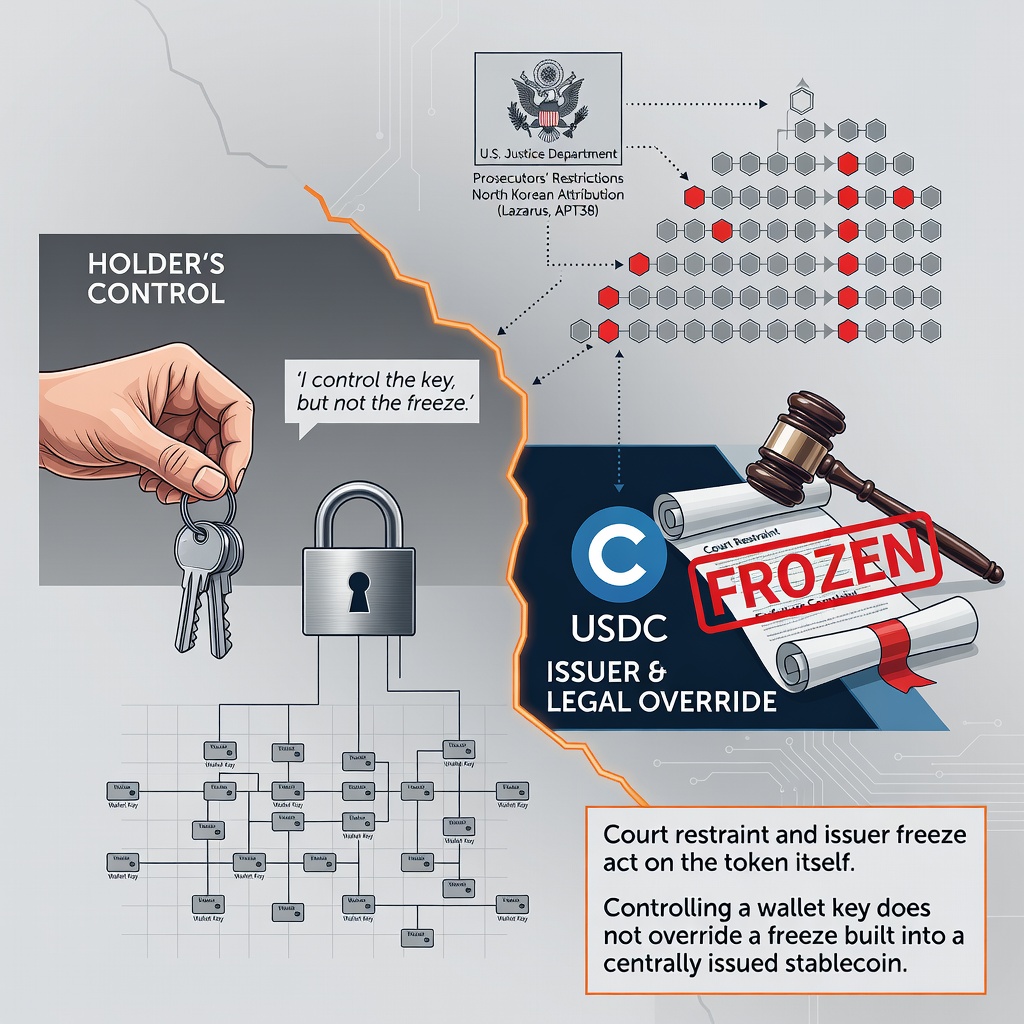
Holding the same issuer’s tokens across many addresses and chains does not remove the issuer’s ability to freeze them. A court restraint and an issuer freeze act on the token itself. Controlling a wallet key does not override a freeze built into a centrally issued stablecoin, and no custody setup removes legal or operational risk. This report concerns assets already named in a forfeiture complaint; it is not a reason to move funds or share recovery information.